
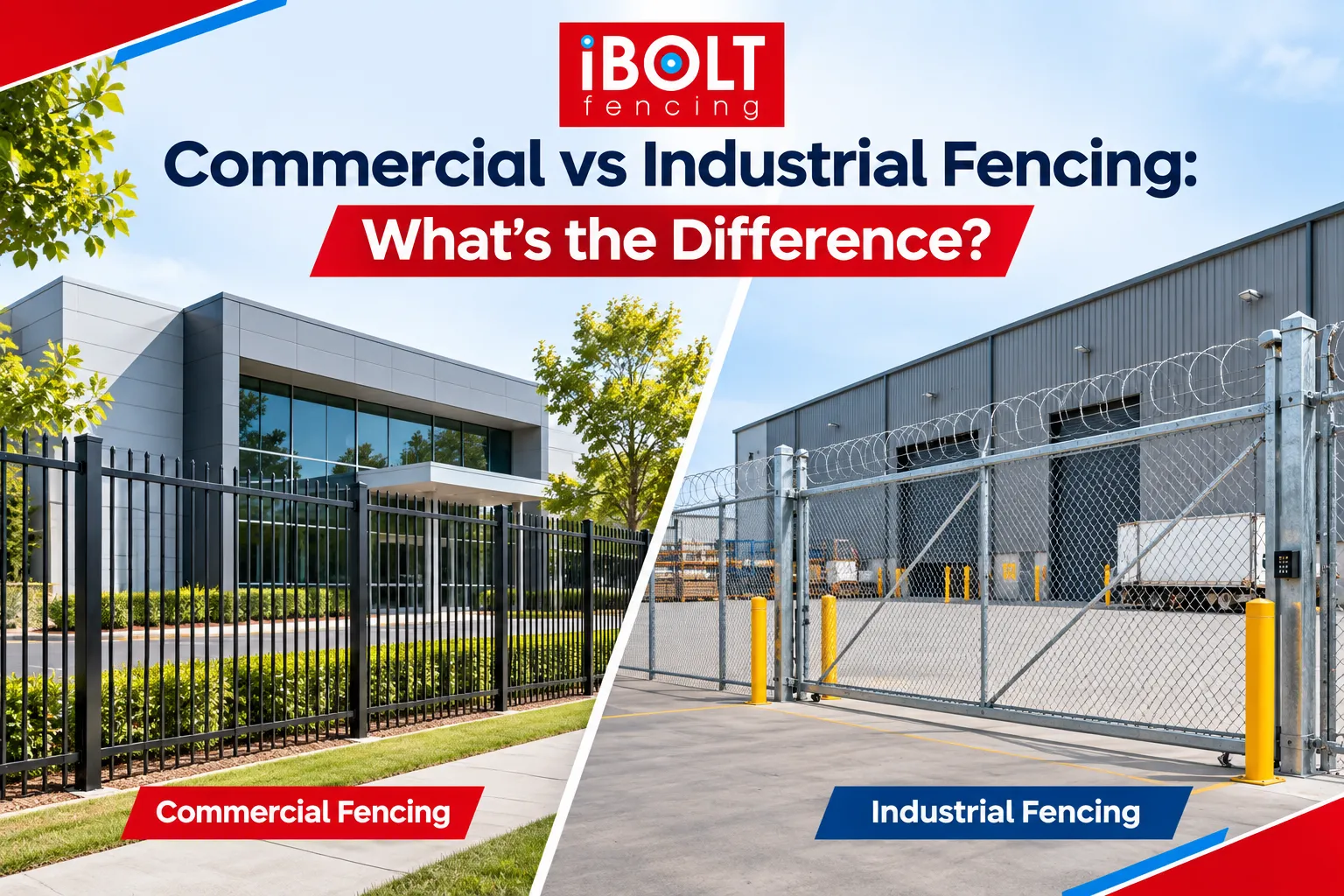
Walk past a suburban office park and then a busy freight yard, and you’ll notice the fences look quite different. Both mark a boundary and keep people out after hours, but they’re built around very different risks. A retail centre needs to feel open and welcoming. A manufacturing plant full of machinery and stock usually doesn’t have that luxury.
That’s why it pays to understand how commercial fencing and industrial fencing differ before you request quotes. Get the match right and you protect the site without paying for features you’ll never use.
What Is Commercial Fencing?
Commercial fencing is the perimeter fencing used around offices, shops, schools, medical centres and other business properties. Its job is to secure the site while still looking tidy and letting customers, staff and visitors move through easily.
Think of a professional services office. The owner wants to stop people wandering onto the property overnight, but they don’t want the building to look like a lockup during business hours. Commercial fencing strikes that balance.
Popular commercial fencing options include:
-
Garrison fencing: Steel panels with a clean, upmarket look that still allow clear sightlines.
-
Chain mesh fencing: An affordable choice for long boundaries, sports grounds and general access control.
-
Palisade fencing: A tougher option for commercial sites that need a firmer perimeter.
-
Security gates: Used to control when and where vehicles and pedestrians enter.
Where You’ll Typically See Commercial Fencing
-
Office buildings and business parks
-
Shopping centres and retail strips
-
Schools and childcare centres
-
Commercial car parks
-
Healthcare and community facilities
On these sites, security matters, but so do street appeal and easy access.
What Is Industrial Fencing?
Industrial fencing is built for properties where security, durability and workplace safety come first. Factories, warehouses, logistics hubs and processing plants often hold expensive equipment, vehicles and stored goods that make them attractive targets.
These sites also run differently. Many operate around the clock, with trucks arriving at all hours and shift workers coming and going. The perimeter has to hold up to that traffic while keeping unauthorised people out.
Common Industrial Fencing Systems
-
Palisade fencing – Vertical steel pales form a solid, hard-to-breach barrier, which makes it a go-to for higher-risk sites.
-
Chain mesh fencing – Practical and cost-effective for large yards, storage compounds and internal site separation, depending on the specification.
-
Garrison fencing – A strong steel option for industrial sites that want security without blocking visibility.
-
Anti-climb security fencing – Suited to sites with elevated risk. How well it works depends on mesh size, height, fixings and installation quality.
Commercial vs Industrial Fencing at a Glance
The two categories overlap, but their priorities usually differ.
|
Feature |
Commercial Fencing |
Industrial Fencing |
|
Main goal |
Boundary control, access and presentation |
Perimeter security and operational protection |
|
Typical sites |
Offices, schools, retail centres |
Factories, warehouses, storage yards |
|
Security level |
Depends on the business |
Often higher due to asset risk |
|
Appearance |
Usually a key factor |
Secondary to performance |
|
Common systems |
Garrison, chain mesh, steel panels |
Palisade, chain mesh, anti-climb |
|
Entry points |
Customer, staff and visitor access |
Heavy vehicle, delivery and staff access |
Treat this as a guide, not a rulebook. Some commercial properties need serious security, while a low-risk industrial yard might only need a clearly marked boundary.
Five Things to Weigh Up Before You Choose
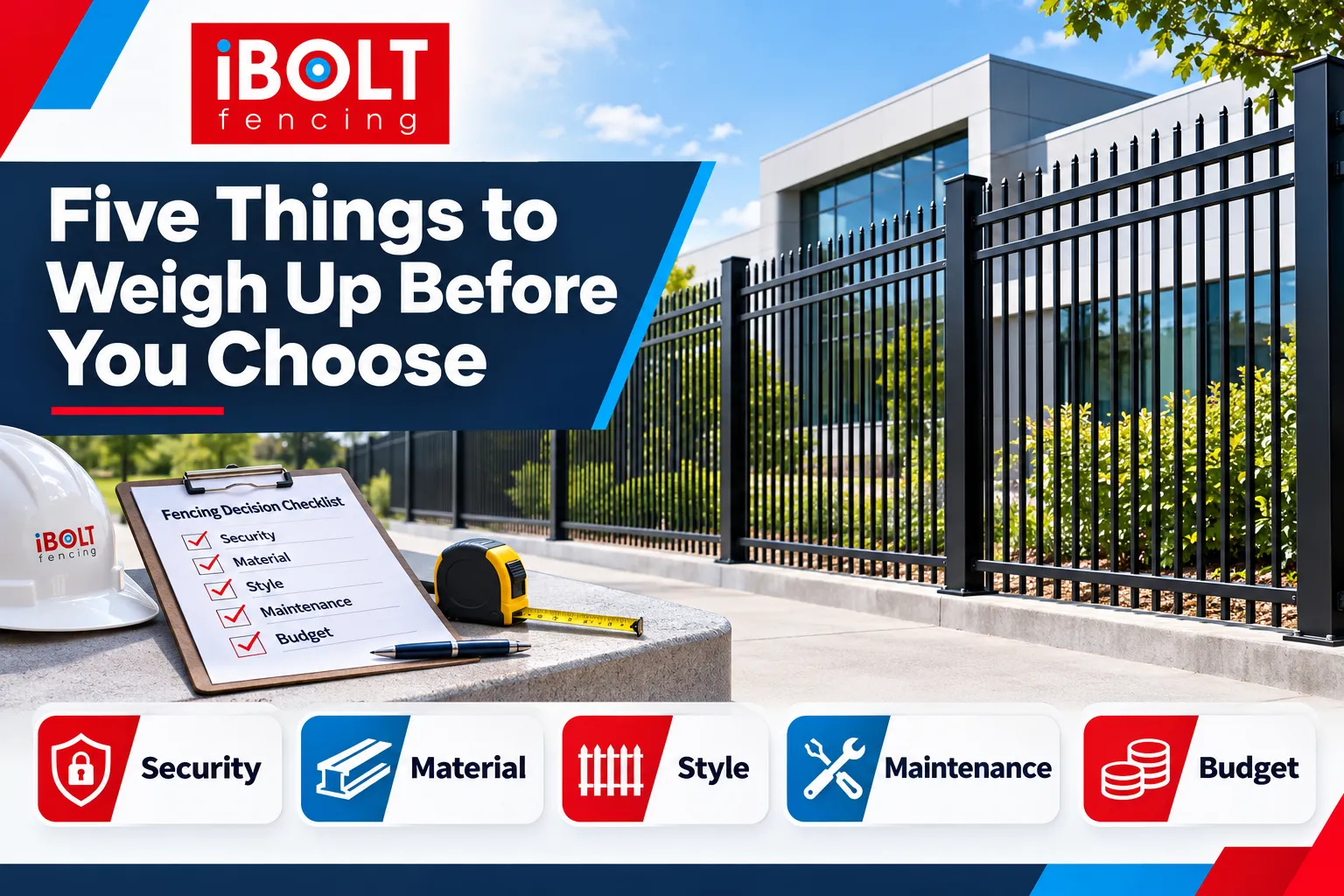
1. What You’re Protecting
Start with the assets and the risk. A shopfront may only need to deter after-hours visitors. A warehouse full of stock may call for stronger barriers, secure gates and camera coverage. Ask yourself how likely a break-in is and what it would cost the business if one happened.
2. Height and Sightlines
A taller fence isn’t always a better fence. On many sites, being able to see through the barrier is just as valuable, because it lets staff and security watch what’s happening outside. Height should come from a proper site assessment and any rules that apply to your property.
3. How People and Vehicles Move
Your fence is only one part of the perimeter. Industrial sites often need wide gates for semi-trailers and forklifts, while commercial sites may want separate entries for customers and staff. Plan gate widths, swing or slide direction, access control and emergency exits early.
4. Perth’s Climate
Western Australian conditions are tough on metal. Sites near the coast cop salt-laden air that speeds up corrosion. Choosing the right galvanising, powder coating and materials, then keeping up basic maintenance, goes a long way towards a longer service life.
5. Whole-of-Life Cost
The lowest quote can turn into the most expensive fence once repairs start. Materials, footings, gates, coatings and upkeep all add to the true cost. Spending a little more on the right specification upfront often saves money later.
Why Professional Installation Makes a Difference
A quality fence can still fail if it’s installed poorly. Footings that are too shallow, posts spaced too far apart or gates hung badly will all shorten its life.
Experienced commercial fencing contractors will assess the ground, recommend a suitable system and plan the job around existing buildings, services and access needs.
Before you sign, ask any contractor about:
-
Their experience on similar commercial or industrial jobs
-
The materials and protective finishes they’ll use
-
Site preparation and footing depth
-
Gate installation and access arrangements
-
Approvals and who handles compliance
-
Timeframes and workmanship warranties
Insist on a detailed written quote so you can compare contractors on the same terms.
Can One Fence Suit Both Commercial and Industrial Sites?
Yes. Plenty of systems work in both settings. Garrison fencing looks just as at home around a corporate office as it does around a factory, and chain mesh is common at schools, warehouses and storage yards alike.
What changes is the specification. Fence height, steel gauge, post spacing, footings, gate hardware and add-on security features can vary widely from one job to the next. The right design is the one that fits your site’s actual risks and daily operations.
Why Choose iBOLT Fencing?
iBOLT Fencing supplies and installs commercial and industrial fencing for businesses across Perth and Western Australia. Here’s why property owners and facility managers work with us:
-
A range built for business sites: We offer garrison fencing, palisade fencing, chain mesh systems and other security fencing options, so you’re not squeezed into a one-size-fits-all product.
-
Advice based on your site, not a sales script: We look at how your property runs, who needs access and what you need to protect before recommending a system.
-
Gates that work with your operations: From pedestrian entries to wide vehicle gates, we plan access around your traffic flow and safety needs.
-
Built for WA conditions: We specify materials and finishes with Perth’s sun, heat and coastal air in mind.
-
Clear, itemised quotes: You’ll know exactly what’s included, so there are no surprises once work begins.
-
Local knowledge: As a Perth-based team, we understand the sites, conditions and requirements businesses here deal with.
If you’re planning a new perimeter or replacing an old one, our team can help you find the right fit. Businesses exploring industrial fencing solutions can contact iBOLT Fencing to talk through options, site requirements and installation.
Frequently Asked Questions
Is industrial fencing stronger than commercial fencing?
Not by default. Industrial sites often need tougher specifications, but strength comes down to materials, design, footings and installation, not the label.
What’s the best fence for a warehouse?
Palisade, garrison and properly specified chain mesh are all common choices. The best fit depends on your security risks, boundary layout and access needs.
Does commercial fencing need maintenance?
Yes. Regular checks help you catch rust, loose fixings, damaged panels and gate faults before they become costly.
How do I decide between commercial and industrial fencing?
Look at the property’s purpose, security risks, access requirements, appearance, exposure to weather and budget. A site assessment is the easiest way to narrow it down.
Final Thoughts
Commercial and industrial fencing do many of the same jobs, but they’re shaped by different priorities. Commercial sites tend to balance security with appearance and easy access. Industrial sites lean harder on strength, asset protection and safe operations.
Rather than choosing by category or price alone, start with what your property really needs. With good planning, the right materials and professional installation, your fence will protect the business and support daily operations for years to come.