

Buying clothing for a crew requires more consideration than simply choosing the toughest-looking garments in a catalogue. Employees may spend long hours walking, bending, lifting, driving or moving between indoor and outdoor areas, so the clothing needs to suit the actual work being performed. Choosing suitable workwear starts with understanding the environment, employee movement, weather conditions and any workplace visibility requirements.
For employers, the aim should be to create a practical clothing system rather than purchasing individual items without considering how they work together. Shirts, pants, shorts, jackets and other garments should form a coordinated wardrobe that employees can comfortably use throughout different tasks and seasons.
Assess the Job Before Choosing the Clothing
Different workplaces expose employees to different conditions.
A warehouse employee may spend most of the day indoors but regularly move into loading areas. A tradesperson may work outside in direct sunlight. Delivery crews may constantly move between vehicles, warehouses and customer sites.
Before purchasing garments, identify:
-
The tasks employees perform
-
How much bending and movement are involved
-
Whether employees work around vehicles
-
Indoor and outdoor conditions
-
Heat and cold exposure
-
Storage or pocket requirements
-
Frequency of garment washing
This basic assessment helps narrow down which garment features are genuinely useful.
Do Not Choose on Appearance Alone
Professional presentation still matters, particularly when employees interact with customers, but appearance should not come at the expense of usability.
A garment may look neat when new but become frustrating if it restricts movement, feels uncomfortable in hot weather or does not provide sufficient storage.
Evaluate Everyday Comfort
Consider whether the garment allows employees to:
-
Bend comfortably
-
Climb or crouch
-
Reach overhead
-
Sit in vehicles
-
Carry tools or equipment
-
Work through long shifts
Employees are more likely to consistently wear supplied clothing when it supports these everyday movements.
Choose Fabrics for the Working Environment
Fabric weight and construction can make a significant difference to comfort.
Heavier fabrics may offer a more substantial feel but can become uncomfortable during hot conditions. Lightweight materials may improve breathability but need to remain suitable for the work environment.
Consider factors such as:
-
Fabric weight
-
Breathability
-
Durability
-
Ease of washing
-
Drying time
-
Stretch
-
Resistance to everyday wear
The ideal fabric depends on the job rather than one universal rule.
Think About Perth and Australian Conditions
For teams working in warmer Australian climates, airflow and heat management can become particularly important.
Outdoor employees may need lightweight shirts, suitable shorts and other garments designed for warmer conditions, while winter or early-morning work may require layers.
Instead of expecting one outfit to work throughout the year, build seasonal flexibility into the clothing program.
Pay Attention to Pants and Lower-Body Movement
Pants are often one of the hardest-working parts of an employee’s wardrobe. They need to accommodate walking, lifting, kneeling and repeated movement while also remaining comfortable around the waist and legs.
When considering hi vis pants, look beyond colour and consider how the garment integrates with the employee’s overall clothing system and job requirements.
Useful Features to Consider
Depending on the role, useful details may include:
-
Reinforced areas
-
Multiple pockets
-
Cargo storage
-
Flexible waist construction
-
Stretch panels
-
Practical leg cuts
-
Suitable fabric weight
Too many features can also become unnecessary. A worker who only carries a phone and small tools may not need large cargo pockets, while a tradesperson may consider them essential.
Understand Visibility Requirements
Where employees work around traffic, machinery, moving vehicles or other visibility-sensitive environments, clothing selection should be based on the workplace’s safety requirements.
Businesses should review the applicable workplace standards and site policies rather than assuming that any brightly coloured garment will automatically be suitable.
Think About the Complete Outfit
Visibility can also be affected by how garments are layered.
If a compliant shirt is covered by a dark jacket, the overall clothing system may no longer perform as intended for the particular environment.
Businesses should therefore plan shirts, pants, jackets and wet-weather garments together rather than selecting each category separately.
Build Around Seasonal Layering
Employees often experience several temperatures during one shift.
A worker might begin early in cool conditions, experience high temperatures during the afternoon and then finish after sunset.
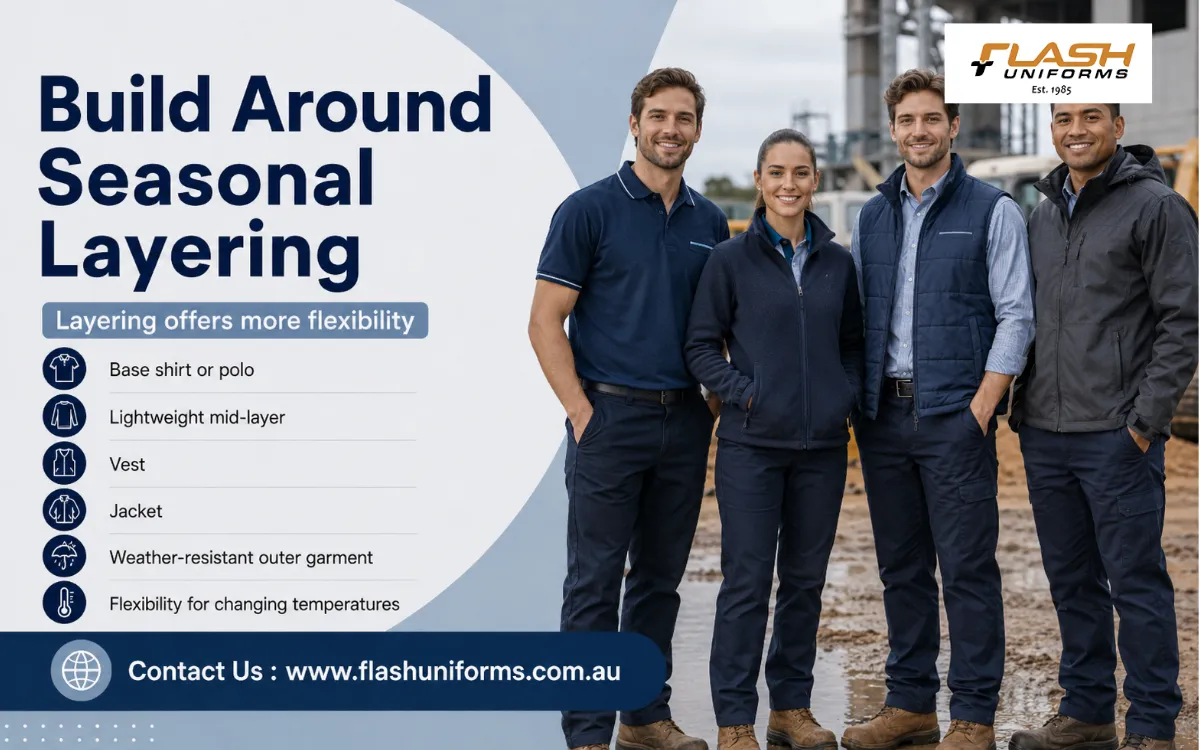
A layered clothing system offers more flexibility.
It may include:
-
Base shirt or polo
-
Lightweight mid-layer
-
Vest
-
Jacket
-
Weather-resistant outer garment
The exact combination depends on the site and job.
Layering can also reduce pressure to find one heavy garment that needs to perform in every weather condition.
Consider Shorts for Suitable Environments
Shorts can be practical in hot weather where the workplace allows them and where they suit the tasks being performed.
However, they should be selected based on more than temperature.
Employers should consider whether workers require protection around the lower legs, whether there are site dress rules and whether staff frequently kneel or work around abrasive surfaces.
For suitable roles, shorts may improve airflow and reduce discomfort during warmer conditions.
Allow Employees Enough Garments for Rotation
One shirt and one pair of pants is rarely enough for a full working week.
Employees need enough clothing to manage laundering, changing weather and unexpected dirt or damage.
A practical allocation may include several shirts, multiple lower-body garments and seasonal layers.
Providing enough clothing can help:
-
Maintain a cleaner appearance
-
Reduce pressure on washing schedules
-
Extend the usable life of individual garments
-
Give employees options for changing conditions
The exact quantity will depend on shift patterns and workplace conditions.
Add Branding Without Compromising Practicality
Many businesses want work clothing to carry their company identity.
Logos can help customers recognise employees and create a more organised company appearance, particularly for mobile trades, installation teams and service crews.
Before adding decoration, consider:
-
Logo size
-
Embroidery or print method
-
Placement
-
Fabric construction
-
Existing pockets
-
High-visibility areas
-
Garment flexibility
Avoid placing oversized branding where it may interfere with functional garment areas.
Involve Workers in the Selection Process
Managers may choose clothing based on specifications, but employees can provide insights that are difficult to see from a product description.
Ask workers which features they actually use and which problems they experience with their existing garments.
Common feedback may involve:
-
Pants sitting too low when bending
-
Pockets being positioned poorly
-
Shirts feeling too warm
-
Sleeves restricting movement
-
Garments shrinking after washing
-
Waistbands becoming uncomfortable
Testing samples with employees can be particularly useful before placing a larger order.
Why Choose Flash Uniforms?
Flash Uniforms offers businesses access to a wide range of clothing options for trades, operational teams and other workplaces that require practical staff apparel. With different styles of shirts, pants, shorts, jackets and related garments available, businesses can build a more complete clothing program rather than sourcing each item separately. Flash Uniforms also makes it easier to explore coordinated options for different seasons, employee roles and presentation requirements, helping organisations create a consistent crew appearance while keeping everyday practicality in mind.
Make Every Garment Part of a System
Successful crew clothing is not created by finding one perfect shirt or one perfect pair of pants.
It comes from understanding the workplace and selecting garments that function together.
Consider movement, weather, washing, employee feedback, visibility, layering and replacement needs before making a final decision. When these factors are addressed early, businesses can build a more practical clothing program that supports employees throughout the working day and maintains a consistent professional appearance across the team.