
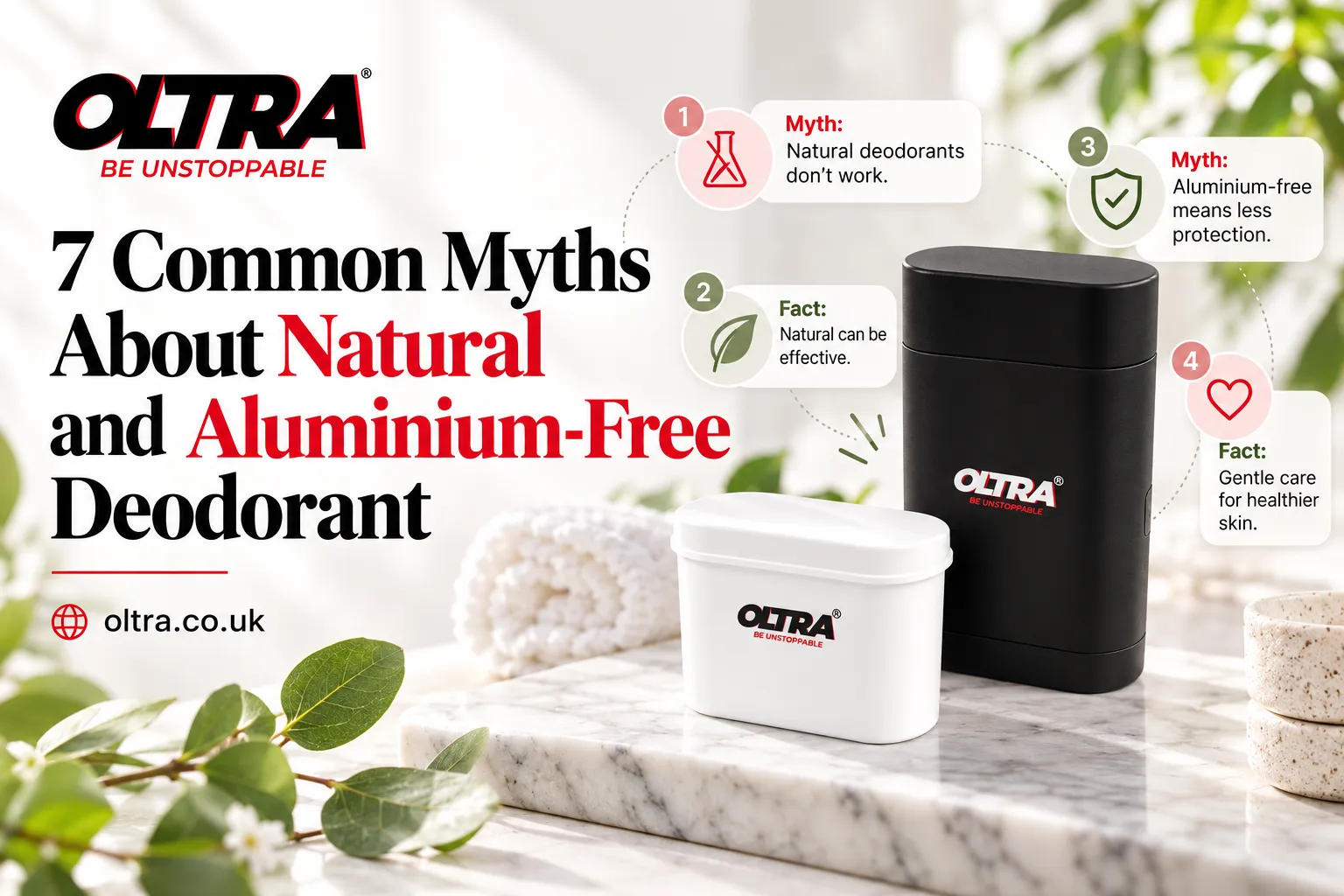
Ask around about natural deodorant and you’ll hear strong opinions. It doesn’t work. It works, but only after a “detox”. It’s safer. It’s gentler. Some of that is half true, and some of it isn’t true at all.
If you’re browsing natural deodorant uk options, separating fact from marketing will save you money and a few uncomfortable weeks. Here are seven myths worth retiring, and what’s actually going on.
Quick answer: Natural, aluminium-free deodorants can control odour well, but they don’t stop sweat. You don’t need an armpit detox, “natural” doesn’t guarantee gentle, bicarbonate of soda isn’t essential, and there’s no good evidence that aluminium antiperspirants cause breast cancer. Choose by ingredients and how your skin responds.
Natural Deodorant Myths vs Facts
|
Myth |
Fact |
|
Natural deodorant doesn’t work |
It controls odour; it just doesn’t stop sweat |
|
Aluminium-free means you won’t sweat |
Only antiperspirants reduce sweating |
|
Aluminium antiperspirants cause breast cancer |
There’s no good evidence for this |
|
You need an armpit detox |
You can switch straight away |
|
Natural means gentle |
Plant ingredients can irritate too |
|
Bicarb is essential |
Other ingredients control odour without it |
|
Stronger scent means better protection |
Scent covers odour; it doesn’t stop it forming |
Myth 1: “Natural Deodorant Doesn’t Work”
This usually comes from comparing a deodorant with an antiperspirant, which do different jobs. A good natural formula tackles odour directly, relying on ingredients like magnesium hydroxide, a mineral that neutralises odour, and zinc ricinoleate, which locks odour molecules away. What it won’t do is keep you dry, so if you judge it on dryness, it will always seem to fall short.
Myth 2: “Aluminium-Free Means You Won’t Sweat”
Aluminium salts are what reduce sweat in an antiperspirant, so a product without them leaves your sweat glands alone. Some formulas add starch to soak up a little moisture, which can feel drier, but that isn’t the same thing. When comparing aluminium free deodorant uk products, look closely at what each one claims to do: fresher underarms is realistic, drier ones isn’t.
Myth 3: “Aluminium Antiperspirants Cause Breast Cancer”
This claim has circulated for years, but Cancer Research UK says there’s no good evidence linking antiperspirants or deodorants to breast cancer. Going aluminium-free is a perfectly reasonable preference, whether you’d rather sweat naturally or simply like the ingredients. It just isn’t a cancer-prevention step, and no brand should imply that it is.
Myth 4: “You Have to Detox Your Armpits First”
Clay masks and detox scrubs are sold on the idea that your underarms need weeks to purge aluminium. There’s no scientific basis for it, as your liver and kidneys deal with waste. What people notice after switching is simply normal sweating returning. Harsh scrubs can irritate sensitive skin, so skip them and start your new product straight away.
Myth 5: “Natural Means Gentle”
“Natural” describes where ingredients come from, not how your skin reacts to them. Essential oils and plant extracts are common irritants, and bicarbonate of soda bothers some people with regular use. Equally, lab-made ingredients aren’t automatically harmful. The real question isn’t natural versus synthetic, but whether the full formula suits your skin.
Myth 6: “Natural Deodorant Needs Bicarbonate of Soda”
Bicarb is popular because it neutralises odour well, but it’s far from the only option. Bicarb-free formulas use alternatives such as magnesium hydroxide and zinc ricinoleate, often with tapioca starch for a drier feel. An aluminum free deodorant without bicarb can be a good fit if bicarb has made your skin itchy before.
Myth 7: “The Stronger the Scent, the Better It Works”
A powerful fragrance can cover odour for a while, but it doesn’t stop odour forming. Fragrance is also one of the most common causes of skin allergies to cosmetics, so heavy scents can be a poor trade for sensitive underarms. A fragrance-free formula can control odour just as well if its active ingredients are doing their job.
How Oltra Guard Avoids These Myths
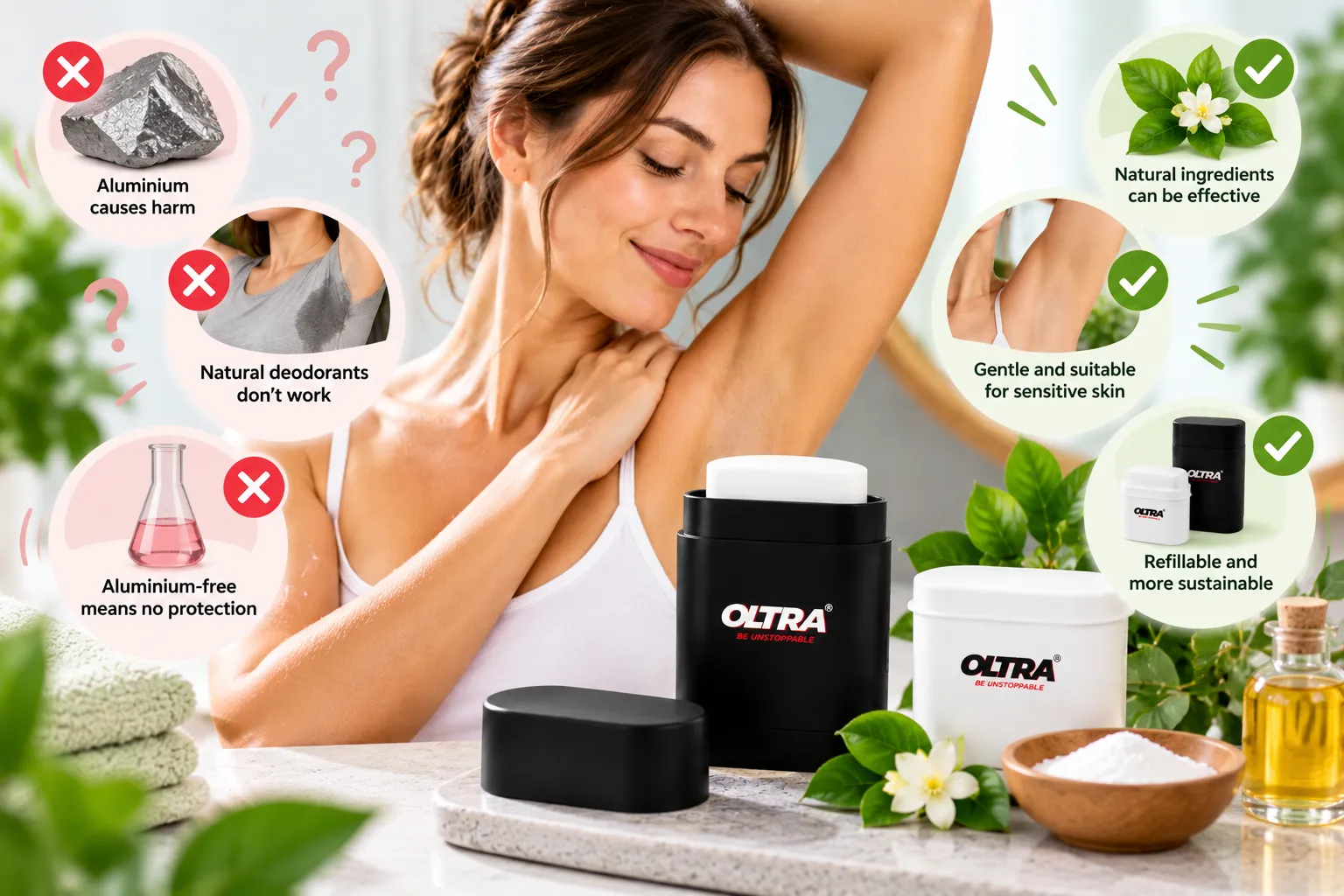
Oltra Guard is a UK aluminium-free deodorant that sidesteps several of these myths. It uses magnesium hydroxide, zinc ricinoleate and tapioca starch rather than relying on perfume, offers a Bi-Carb-Free formula alongside its Standard one, and has a fragrance-free Core option. It’s a refillable system, with a reusable applicator and a 40g refill. Like any deodorant, it controls odour rather than sweat, and results vary.
Frequently Asked Questions
Does aluminium in antiperspirant cause Alzheimer’s?
There’s no convincing evidence that it does. Alzheimer’s Research UK says there isn’t enough good-quality evidence that everyday aluminium exposure, which includes antiperspirants, causes the disease, and the Alzheimer’s Society says no convincing link has been established.
Is aluminium-free deodorant the same as natural deodorant?
Not necessarily. “Aluminium-free” simply means there are no aluminium salts, so the product won’t reduce sweat. “Natural” usually refers to plant- or mineral-derived ingredients, but it isn’t a legally defined term for cosmetics in the UK. A product can be one without being the other.
Should natural deodorant tingle or sting?
No. Tingling, stinging or burning is a sign of irritation, not proof that a product is working. Common causes include bicarbonate of soda, fragrance and applying straight after shaving. Wash it off, let your skin settle and try a gentler formula, and see a pharmacist if it persists.
Is natural deodorant chemical-free?
No product is truly chemical-free, because every ingredient, from water to plant oils, is a chemical. “Chemical-free” is a marketing phrase rather than a meaningful claim. It’s more useful to look at what each ingredient does and whether any have caused you problems before.
Is there a difference between men’s and women’s deodorant?
Usually only in scent and packaging. The odour-control ingredients tend to be the same, because men and women have the same types of sweat glands. Choose by formula and fragrance preference rather than which aisle a product sits in.
Does sweating more mean you’ll smell more?
Not necessarily. Most of the sweat you produce when you’re hot comes from eccrine glands and has very little smell. Odour comes mainly from apocrine sweat in the armpits being broken down by bacteria, so someone who sweats less can still notice more odour.
Final Thoughts
Most deodorant myths come from mixing up two jobs: controlling odour and stopping sweat. Once you separate them, choosing gets much easier. Read the ingredient list, ignore “detox” and “chemical-free” claims, and judge any product on how fresh and comfortable you feel during a normal week.